

Delivering Sustainable Congress Management Across DrupalCon Europe
Who DrupalCon Europe Is and Why This Partnership Matters
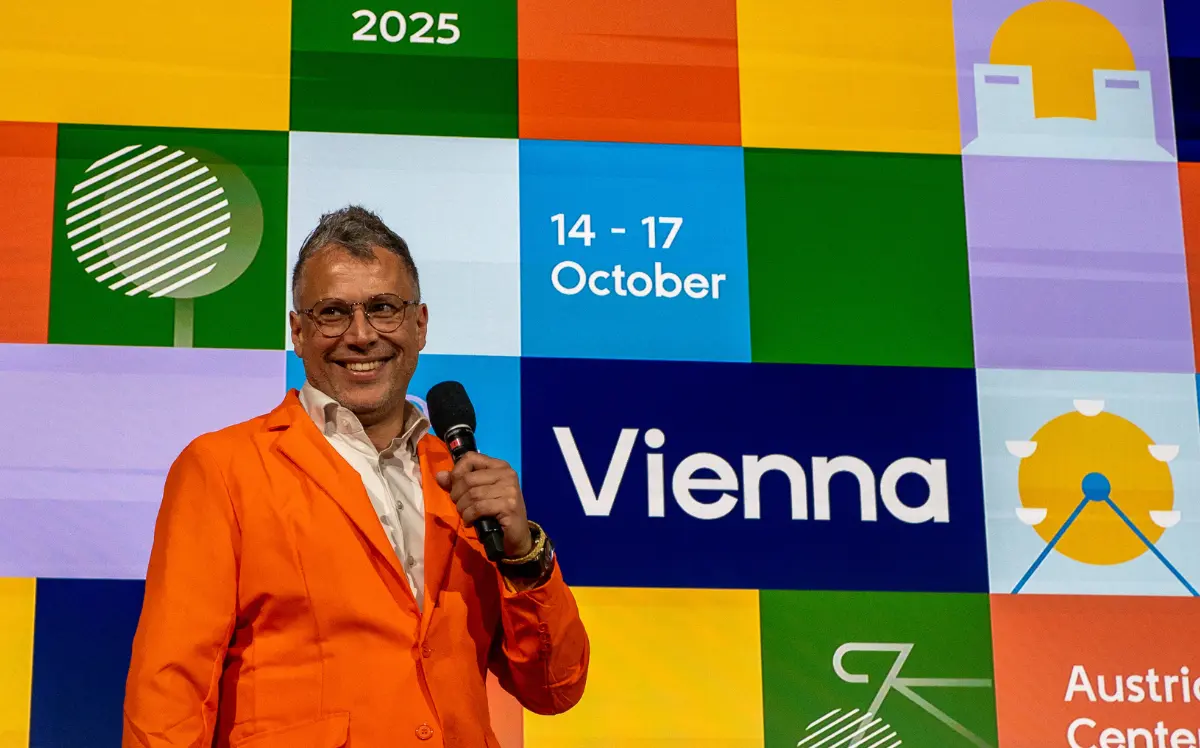
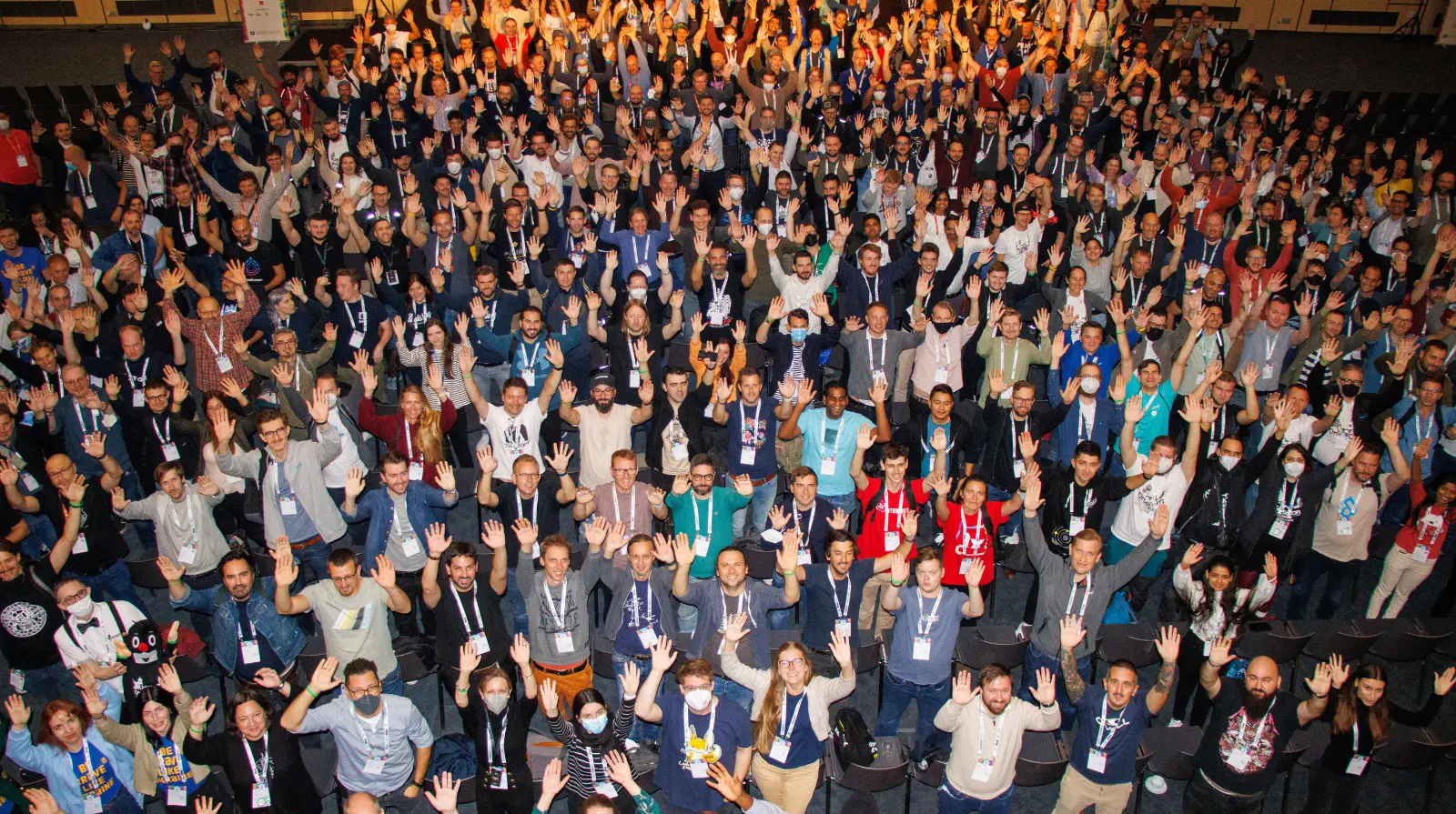
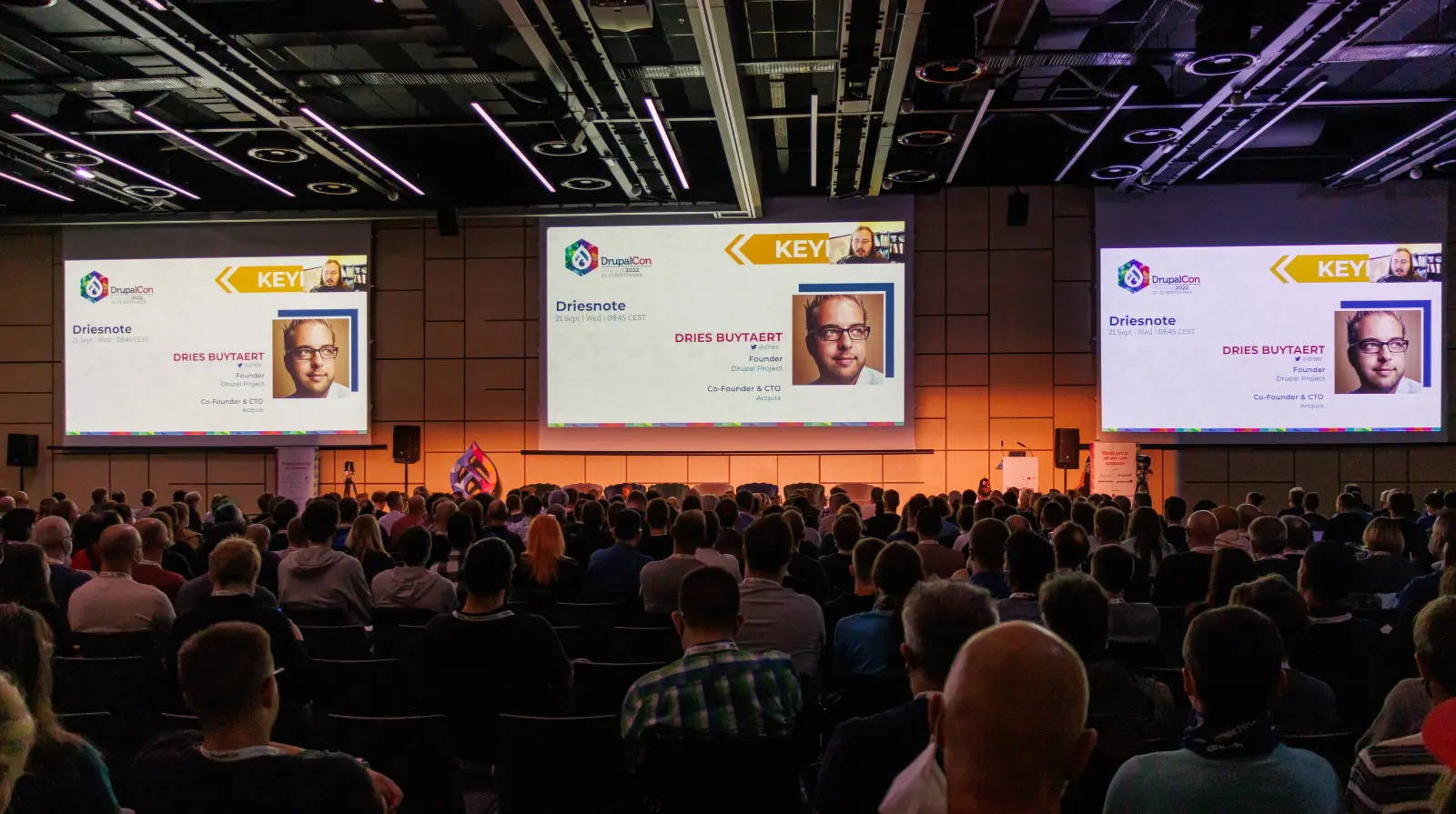
DrupalCon Europe is the premier annual conference for the global Drupal open-source community, bringing together developers, digital agency leaders, contributors, and public sector technologists from across the world. Run by the Drupal Association, the conference has been delivered in partnership with Kuoni Tumlare Congress as PCO since Lille 2023. At the Vienna 2025 edition alone, 935 participants from 57 countries registered, 96% of whom checked in on the day, with 253 attendees joining that edition for the first time.
Drupal as a platform is built on values of collaboration, equity, and shared responsibility, and DrupalCon Europe is designed to reflect those values in practice. Sustainability has been embedded in the congress since Lille 2023, making it one of the few technology conferences in Europe that integrates environmental and social goals systematically across venue selection, catering, community programming, and sponsor engagement.
For Kuoni Tumlare Congress, this partnership provided both the mandate and the community engagement to pursue a structured approach to sustainable congress services in the European technology events sector, with measurable outcomes documented in our DrupalCon Europe partnership case study.
The Challenge of Sustainable Congress Delivery at Scale
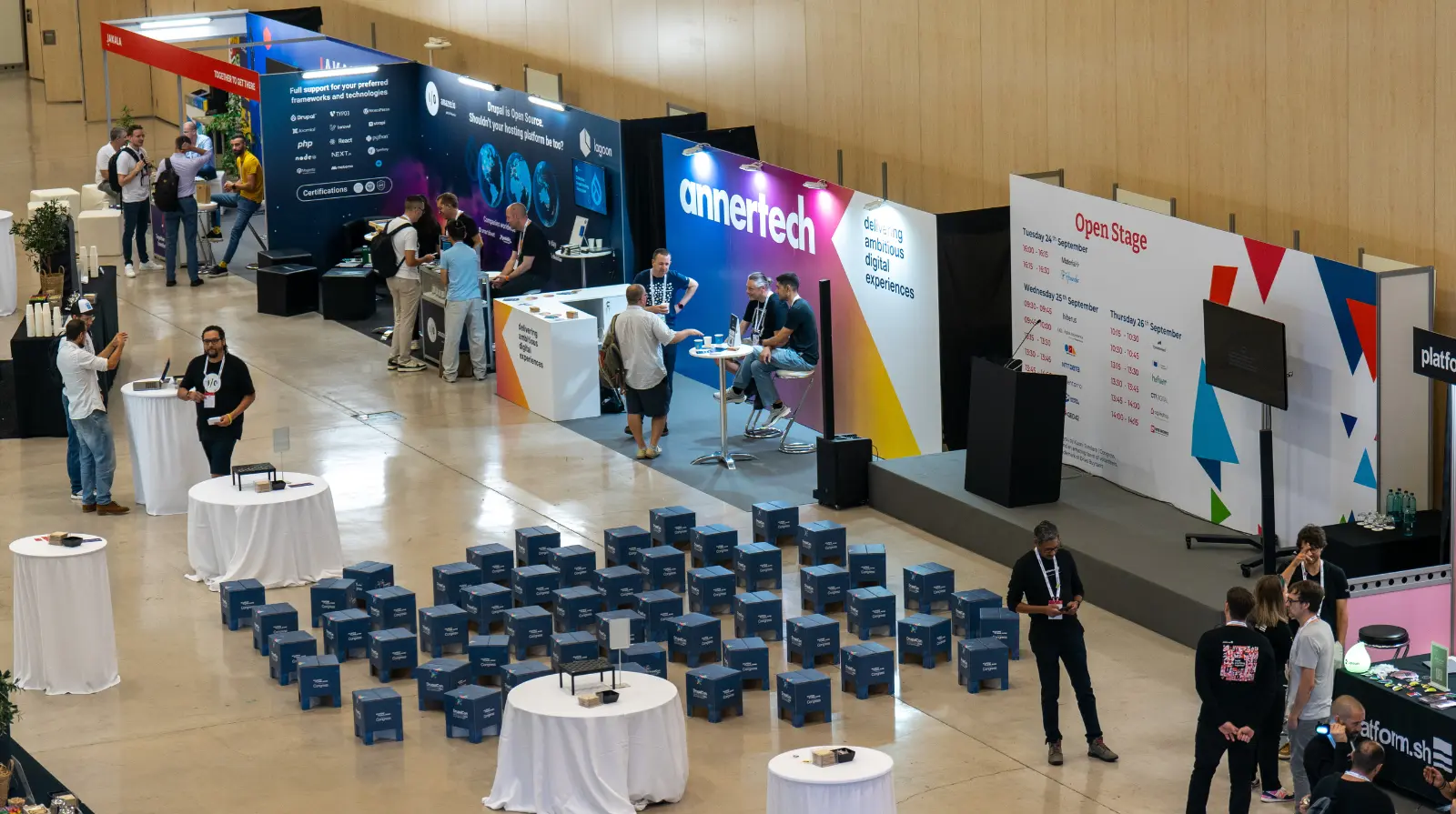
Delivering sustainable congress management for an event of DrupalCon Europe's scale is not a single operational task. It is a multi-stakeholder coordination challenge spanning the organising committee, venue operators, catering suppliers, sponsors, exhibitors and 935 attendees travelling from 57 countries. Each group makes independent decisions about travel, stand construction, catering, promotional materials and accommodation, all of which affect the overall footprint of the congress.
Data collection presents compounding challenges. Not all participants complete post-event surveys, suppliers report emissions in different formats, and local regulations in some markets restrict activities such as food donation. Sponsor and exhibitor data is gathered through exhibition portals, direct communication, and post-event surveys, a process that requires significant coordination effort and often translation between markets.
Financial constraints add a further layer of complexity. Sustainable alternatives, compostable materials, carbon tracking tools, eco-certified caterers, and the EventsAir congress management platform, consistently carry a cost premium over conventional options. Kuoni Tumlare Congress approached these challenges systematically, building a structured sustainability framework that could absorb this complexity and evolve with each successive edition.
How Kuoni Tumlare Congress Structures Sustainable Delivery
Kuoni Tumlare Congress built DrupalCon Europe's sustainability programme around six interconnected pillars aligned with the United Nations Sustainable Development Goals (UN SDG): Community, Catering, Wellbeing, Climate Action, Waste Reduction, and Impactful Partnership. Sustainability is integrated from the first planning meeting, not added at the end, with measurable goals defined, supplier criteria set, and community initiatives planned ahead of each edition.
Each pillar has defined actions, responsible parties, and outcome metrics, enabling progress tracking and improvement across editions. The near-zero landfill achievement at Barcelona 2024 was a direct result of the waste strategy developed in Lille 2023. The ÖBB rail partnership for Vienna 2025 extended the low-emission travel approach first piloted in Barcelona, where 336 discounted transit tickets were sold to delegates. A sponsor sustainability contest rewarded exhibitors across three categories: Travelling, Stand Construction, and Goodies and Leaflets, while a parallel train travel contest motivated attendees to choose lower-emission transport.
Accommodation is channelled through our congress accommodation management platform, allowing delegates to select partner hotels with verified sustainability credentials. Sponsor and exhibitor engagement is managed through a dedicated sustainability guide distributed in advance of each edition.
The Six Pillars in Action
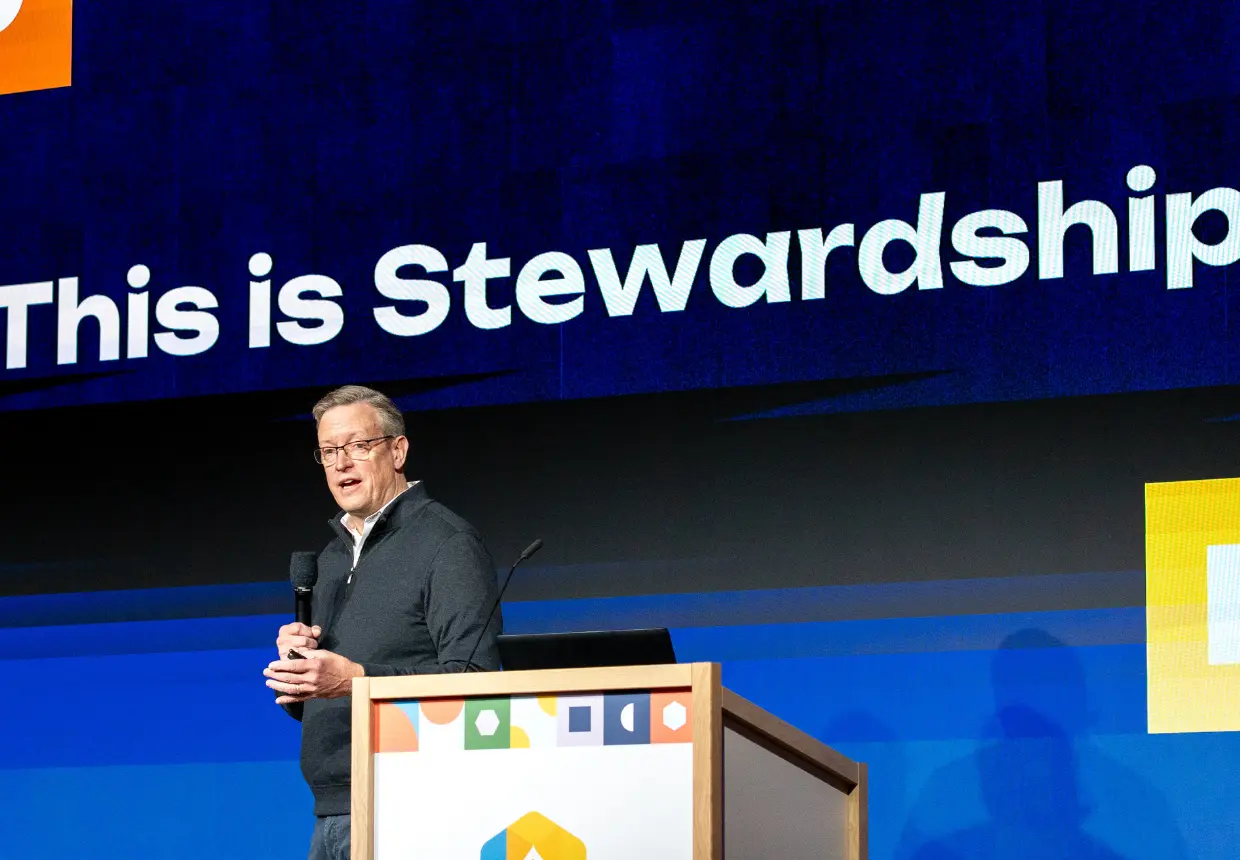
Sustainability is embedded from the first planning meeting, with measurable goals, UN SDG alignment, and commitments coordinated across the venue, suppliers, sponsors, and organising committee. Catering defaults to vegan and pescetarian menus using locally sourced, seasonal ingredients, with leftover food donated to local organisations where regulations allow and single-use items replaced by reusable or compostable alternatives. Venues are selected for energy efficiency and strong public transport access, while delegate travel emissions are tracked and low-emission options actively promoted through rail partnerships and discounted transit schemes.
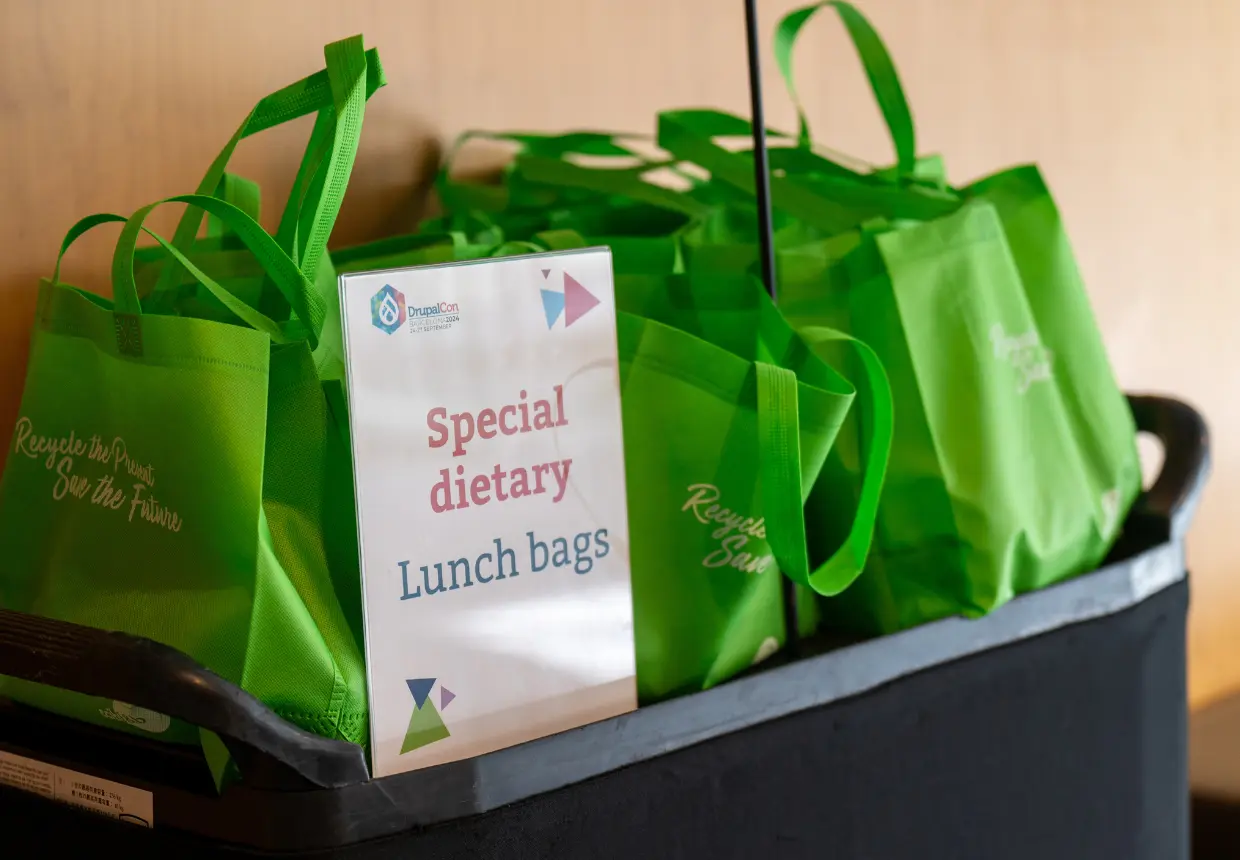
Community and inclusion are supported through grants, scholarships, and newcomer programmes, alongside initiatives such as Drupal in a Day, local association stands, and contribution sessions that engage the wider community throughout each edition. Waste sorting and composting stations are maintained across the venue, and printed materials are minimised through digital-first communications, reusable signage, and water refill stations in place of bottled water.
Sustainable Congress Services Delivered Across Three Editions
On climate action, venues were selected for strong public transport access and energy efficiency credentials. The Barcelona 2024 venue, the CCIB, delivered a 24.3% reduction in on-site GHG emissions compared with 2023 (from a baseline of 75.95 tCO₂e), with zero landfill disposal. In Vienna 2025, an ÖBB rail partnership generated 53 ticket purchases and saved an estimated 2.2 tonnes of CO₂. A public transport scheme in Barcelona 2024 sold 336 discounted transit tickets to delegates.
The community pillar included 4 grants and 5 inclusion scholarships in 2024–2025. Drupal in a Day brought 113 participants aged 18–52 to Vienna 2025, representing 15 local associations. The Newcomer Programme and First-Time Contributor Workshop opened further entry points.

Why Vienna, Barcelona, and Lille Shaped the Sustainability Approach
Location is central to DrupalCon Europe's sustainability programme. Each host city brings different infrastructure, venue options, and community resources, and Kuoni Tumlare Congress adapts the strategy accordingly. Barcelona's CCIB venue delivered near-zero waste with detailed end-of-life tracking across all waste streams, and the city's public transport network supported a discounted transit scheme that sold 336 passes to delegates. Vienna's position as one of Europe's best-connected rail hubs made it a natural fit for the ÖBB partnership, encouraging delegates from Germany, the Netherlands, and across the continent to travel by train rather than fly.
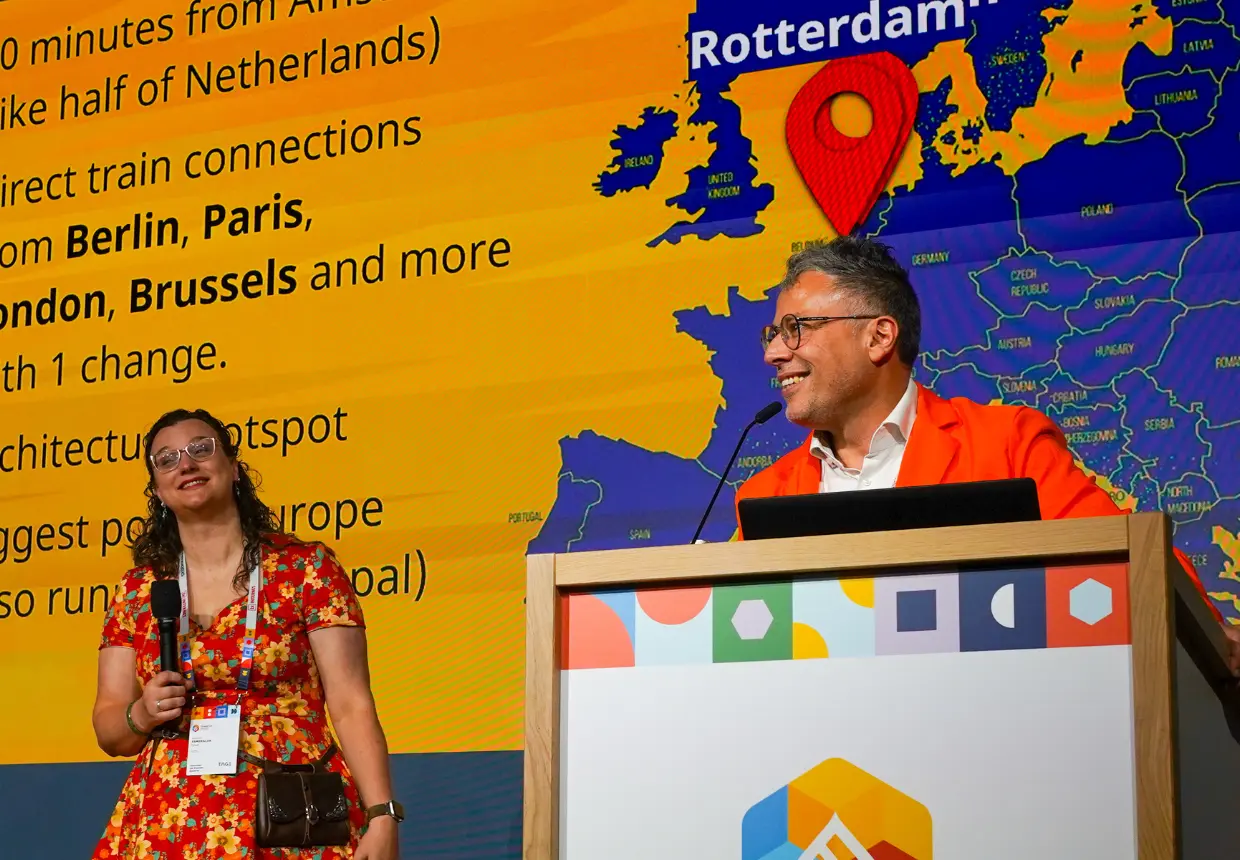
For Rotterdam 2026, the Netherlands' extensive rail infrastructure and DrupalCon's established sustainability programme provide a strong platform for continued emissions reduction. For destination selection criteria, see our guide to sustainable congress destinations across Europe.
The Future of Sustainable Congress Delivery
Looking ahead, Kuoni Tumlare Congress is working to improve data collection on delegate air travel, introduce sustainability standards for accommodation partners via HotelMap, and embed sustainability performance criteria into contracts with sponsors and suppliers. Venue selection for future editions already treats sustainability credentials as a weighted factor in decision-making, ensuring location contributes to, rather than works against, the congress's environmental goals.
Related Insights
Keep exploring. More news and perspectives await.